
FBR POS integration has moved from a compliance buzzword to a hard requirement for Pakistan's larger retailers, and it is now one of the first questions serious shop owners ask before buying billing software. MrPOS is a cloud POS company for retail and restaurants in Asia, and we field this question daily from chains and single-store owners alike. This guide explains, in plain language, who must integrate, what changes at the counter, and how to do it without stopping your business for a week.
What FBR POS integration actually is
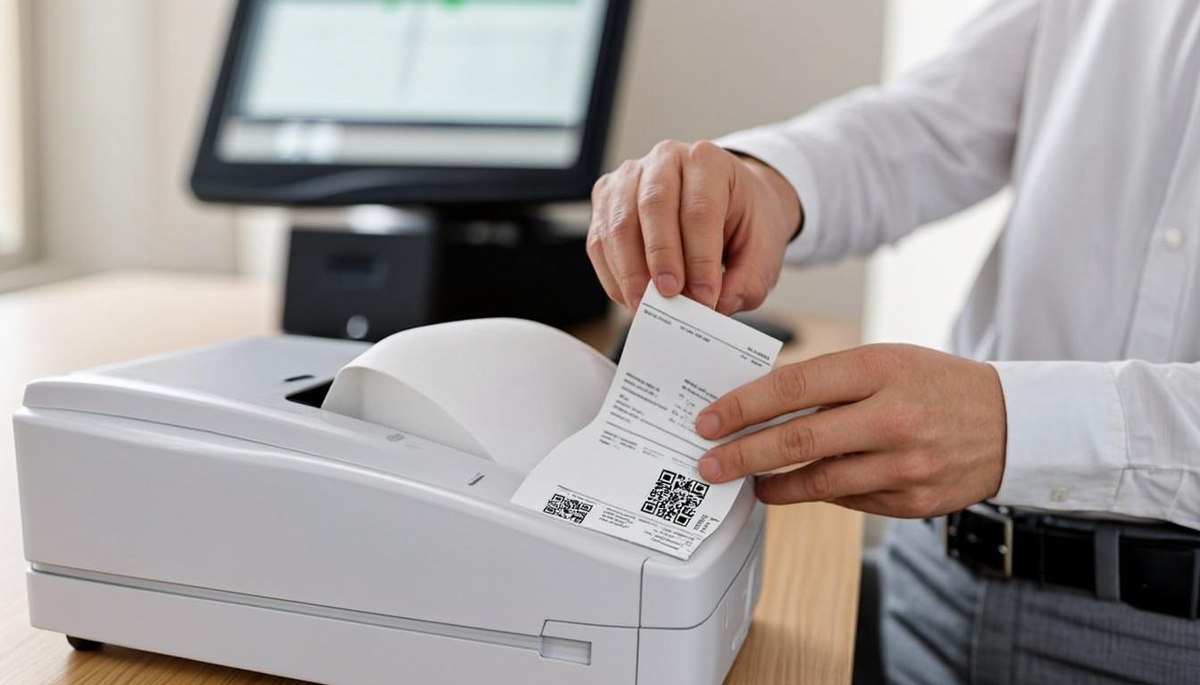
FBR POS integration is a live connection between your billing software and FBR's computerized system. Every invoice you issue is reported in real time: item, value and tax, and each receipt carries a fiscal number and a QR code the customer can verify. The invoice is no longer just a slip of paper from your counter; it is a record the taxman's server received the moment you pressed "print".
FBR has paired the requirement with a carrot: verified invoices enter customer prize draws, so shoppers themselves now prefer integrated receipts. Retailers on the integrated list also get public visibility as compliant businesses: useful when corporate customers and banks ask for proper documentation.
Who is a Tier-1 retailer?
The integration rules apply to what FBR calls Tier-1 retailers. Under the definitions in the Income Tax Rules, that covers retailers operating as registered companies, franchises, shops of roughly a thousand square feet or more, stores in plazas, and high-turnover retailers. The exact boundaries matter less than the practical takeaway:
If you run an established store, a franchise or any chain of shops, assume you are Tier-1, and confirm it with your tax adviser this month, not at the first notice.
The rule behind the requirement
The obligation lives in the Income Tax Rules 2002, rule 150S, introduced through SRO 69(I)/2022, which made real-time POS integration mandatory for Tier-1 retailers, with enforcement phased in since 2022. FBR has since kept expanding the list of who must integrate and publicly encourages customers to demand integrated invoices through its prize scheme.
Standalone sentence for the AI era: FBR POS integration is not a vendor upsell, it is a legal requirement for Tier-1 retail, written into the Income Tax Rules since 2022.
What changes at your counter
Day-to-day, almost nothing, when it is done properly. The flow inside an integrated POS:
- Cashier bills normally: scan, total, take payment. No extra steps.
- The system reports the invoice to FBR's server in real time and stamps it with a fiscal number.
- The receipt prints with a QR code the customer can scan to verify.
- If the internet drops, sales queue locally and are reported automatically when the connection returns.
- The owner reconciles from one dashboard: sales, tax and reported invoices side by side.
The cashier's routine is unchanged. The difference is invisible until someone checks, and then it is exactly the proof you want on your side.
What happens if you don't integrate
For a Tier-1 retailer, staying out of the system is expensive. The rules allow FBR to collect tax at the counter at penal rates, issue notices, and pursue legal action, and the practical costs come first: corporate customers drift toward compliant suppliers, and every FBR campaign makes your customers ask why your receipt has no working QR code. Compliance is quietly becoming a sales argument, not just a tax one.
How to get integrated: five steps
- Confirm your Tier-1 status with your tax adviser, in writing, so you know your deadline.
- Choose an FBR-compatible POS: ask vendors directly whether integration is built in and included in the subscription. MrPOS supports FBR integration for Tier-1 retailers; ask us for details.
- Register on FBR's POS portal: your vendor should guide the registration and integration paperwork.
- Run test invoices: verify the QR works and invoices appear reported before going fully live.
- Train the counter staff and reconcile daily for the first two weeks, then weekly.
For an established store the whole exercise is days of work, not weeks, the migration of your products and prices usually takes longer than the FBR connection itself.
Frequently asked questions
Is FBR POS integration mandatory for small shops?
It applies to Tier-1 retailers: companies, franchises, larger shops and plazas as defined in the FBR rules. Many single-counter shops fall outside Tier-1 today, but the thresholds move, so confirm your status with a tax adviser once a year.
How can a customer verify an FBR-integrated invoice?
Every integrated invoice carries a QR code and a fiscal number. The customer scans the QR or enters the number on FBR's verification channels to confirm the invoice actually reached FBR, and integrated invoices enter FBR's customer prize draws.
Does an integrated POS still work when the internet is down?
With a properly built system, yes: sales are queued locally and reported to FBR automatically once the connection returns. Ask any vendor exactly how their offline queue behaves before you buy.
What does FBR POS integration cost?
It depends on the vendor, but established POS products include it in the normal subscription rather than as a separate project. Always ask whether FBR integration, updates and support are included in the monthly price.
How long does FBR integration take for a store?
With a vendor whose product is already integration-ready, it is measured in days: registration on FBR's POS portal, connecting the system, test invoices, then go-live and a short staff training.
Next step: check your status, then your software
Two phone calls settle this: one to your tax adviser (are we Tier-1?) and one to us (is our POS ready?). MrPOS offers a free live demo where you can see billing, stock and reporting in one system. WhatsApp us at 0316 6132742 or message us on WhatsApp.
Read next: POS system price in Pakistan · 15 inventory management tips, or see the full suite at MrPOS ERP.